
 (408) 947-1111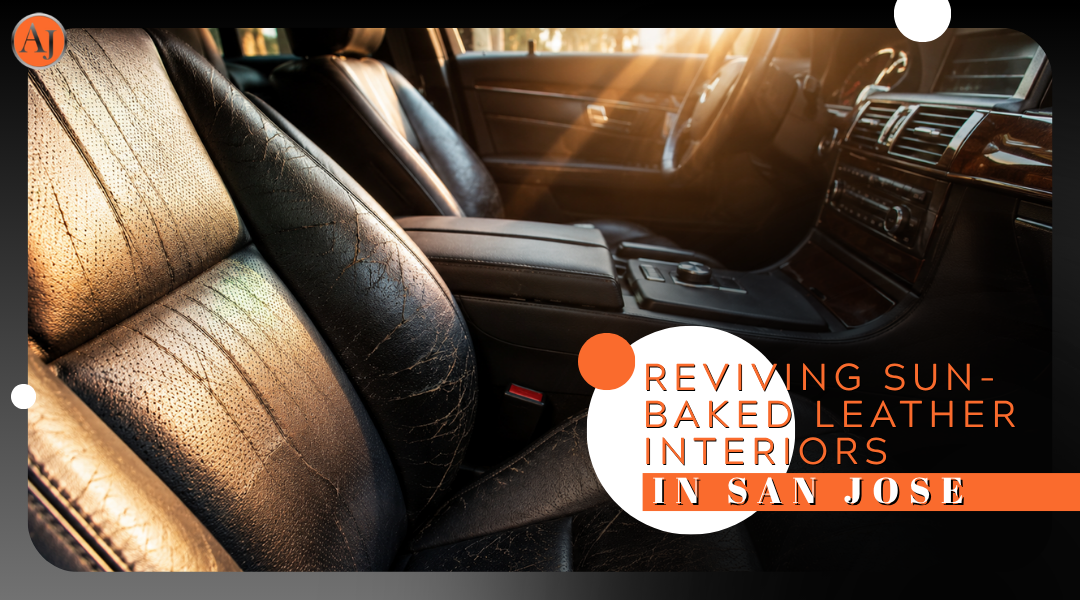
Park on Coleman Ave in July, and the cabin turns into an oven. Vinyl gets tacky, plastics off-gas, and the leather on your seats dries out, stiffens, and starts to crack along the bolsters.
That heat is no small thing. On an 80°F day, a parked car’s interior can climb past 120°F within an hour, according to NHTSA. At AJ Professional Detailing in San Jose, we clean and recondition sun-baked leather before those hairline cracks turn into splits.
Quick Summary: Key Takeaways
- Heat is the enemy: a parked car’s cabin can top 120°F, drying the oils out of the leather.
- Watch the driver’s bolster: fading and stiffness show up there first, before cracks appear.
- Cracks don’t heal: conditioning slows the damage, but a deep split is upholstery work, and we’ll say so.
- Three-step revival: we clean, condition, and seal with a UV-blocking protectant.
- Reapply seasonally: refresh the UV protectant every three to four months in San Jose sun.
Sun and heat are what dry out and crack leather
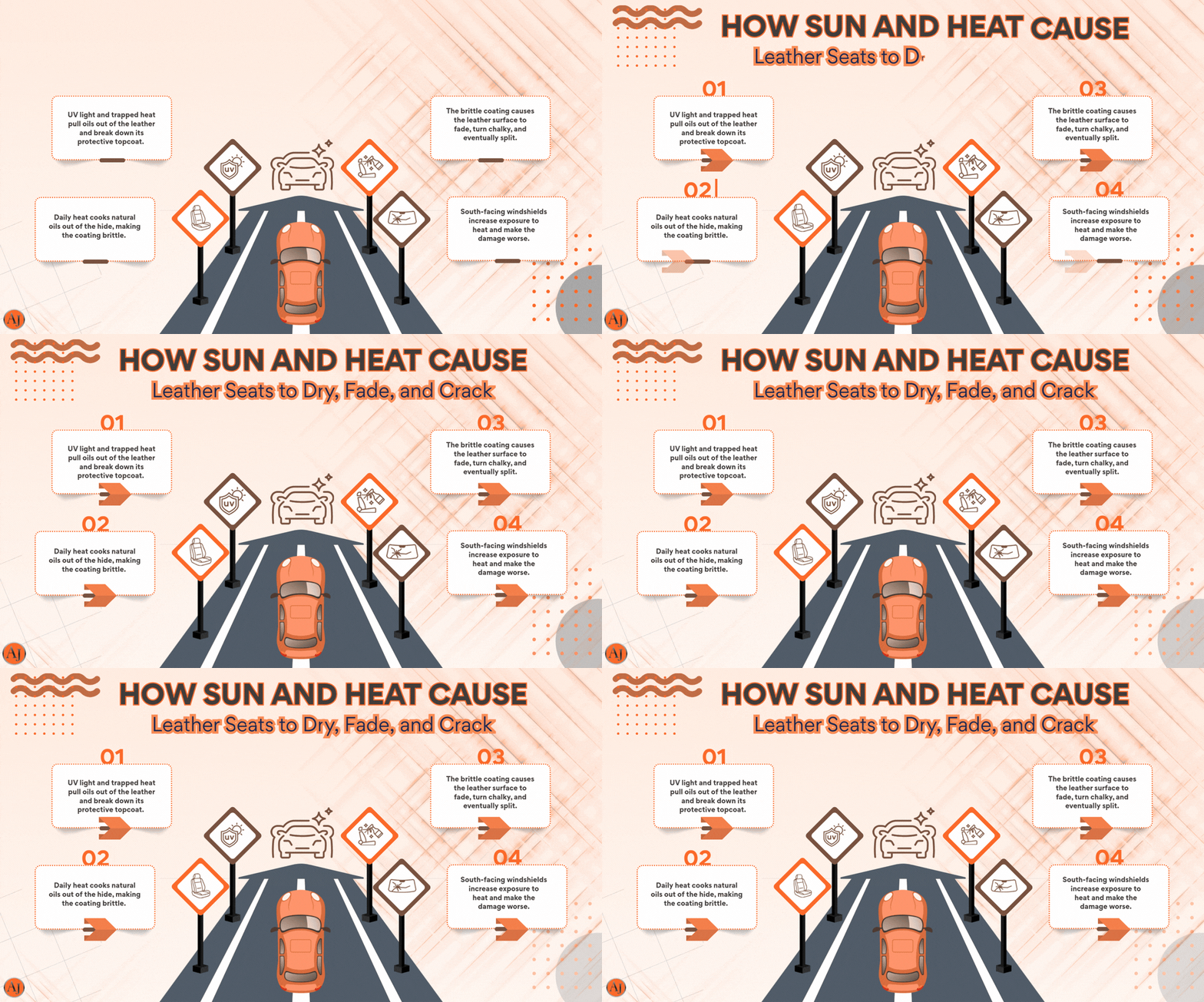
UV light and trapped heat are the two things wrecking your seats. They pull the oils out of the hide and break down the protective topcoat.
Factory automotive leather wears a thin pigmented finish, and once-daily heat cooks the natural oils out of the hide beneath it; that coating turns brittle, and the surface starts to fade, chalk, and split. First, you see fading on the driver’s bolster. Then a dull, chalky look. South-facing windshields make it worse.
Fading, stiffness, and cracks are the warning signs
The early tells are color fading and a stiff, dry feel. Ignore those, and cracks follow.
It’s easy to check. Run your hand across the seat: supple and smooth is healthy, while stiff, rough, or shiny-hard means the hide is starved. Look at the seams and the outer driver’s bolster first, because that’s the spot you drag across every time you climb in, and it’s where the sun lands hardest through the side glass. A faint crackling when you sit is a bad sign.
Skipping care lets small cracks become permanent damage
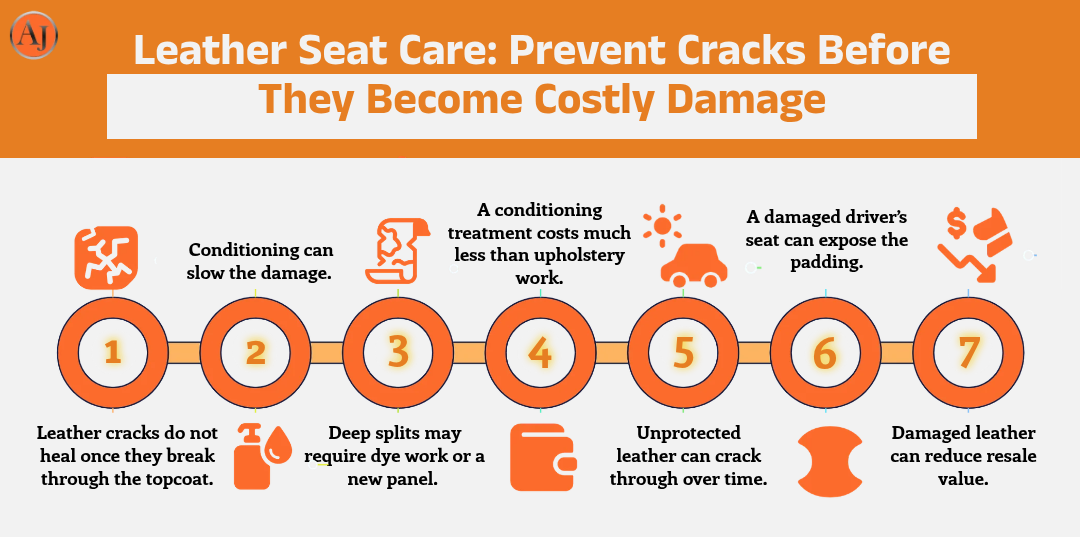
Once leather cracks through the topcoat, it doesn’t heal. Conditioning slows things down, but a deep split means dye work or a new panel, and that’s an upholstery shop’s trade, not a detailer’s.
A conditioning treatment costs a small fraction of what an upholstery shop charges to re-dye a panel or cut a new cover, so the cheapest move is to feed and protect the hide before it cracks through. Leave it and the driver’s seat opens up, padding shows, and resale takes a hit. The math is simple.
Our leather revival is a clean, condition, and protect process
We revive leather in three steps: deep clean, condition, then seal. No harsh degreasers that strip the finish.
First, a pH-balanced cleaner and soft brush lift the ground-in grime and body oils; then a penetrating conditioner restores moisture before a UV-blocking sealant goes on last to slow the next round of damage. We use Koch Chemie products. No silicone shine. On badly faded seats, we’ll tell you straight when cleaning has hit its ceiling.
UV protection and smart parking keep leather healthy longer
The best fix is preventing the damage. A UV protectant on the leather plus smart parking buys your interior years.
We finish every interior detail with a UV-blocking dressing, and if you reapply it a couple of times through the San Jose summer and park with a sunshade, you’ll add years to your seats. Crack a window on hot days. Use a windshield shade. Small habits, big payoff. Ask about our Wash Pass to keep the whole car maintained.
AJ Professional Detailing has restored Bay Area interiors since 1985
AJ Professional Detailing has detailed cars in San Jose since 1985. We’re the interior specialists off Coleman and Taylor.
Every job starts with a walk-around consultation so you’re never paying for work your seats don’t need, and we handle leather, Alcantara, cloth, and full fleet vehicles for drivers across Silicon Valley. Koch Chemie and System X products. A calm waiting room. Book online in minutes and see why people drive across the valley for results like ours.
Frequently Asked Questions
Q: How do you fix cracked leather car seats?
A: Light surface cracks respond to a deep clean and heavy conditioning that puts oils back into the hide. Deeper cracks need dye work or a new panel, which is an upholstery specialist’s job rather than a detailer’s. We’ll tell you honestly which one your seats need.
Q: How often should I condition leather car seats in a hot climate?
A: In San Jose heat, condition leather every three to four months and reapply a UV protectant with it. Daily sun drivers should lean toward the shorter interval. Regular care beats an expensive upholstery bill later.
Q: Does conditioning really protect leather from sun damage?
A: Yes, when it includes a UV-blocking protectant. Conditioner restores moisture; the UV sealant slows the fading and cracking that heat causes. Together, they add years to the interior.
Q: Can a detailer bring faded leather seats back to their original color?
A: Only partway. A deep clean and conditioning strip years of haze and dulling off intact leather, and the color reads much closer to factory afterward. But pigment that’s actually gone has to be re-dyed, and that’s an upholstery specialist’s work, not ours. We’ll show you the line during your consultation.
Bring your sun-baked interior to AJ Professional Detailing
Seats feeling stiff or looking faded after a San Jose summer? Get them cleaned and conditioned before the cracks set in. Book a leather revival online, and we’ll bring them back to life.
AJ Professional Detailing — 702 Coleman Ave, San Jose, CA 95110Hours: Mon–Sat 8:00 AM – 5:00 PM; Sun 8:00 AM – 3:00 PM
Website: ajautodetail.com