
 (408) 947-1111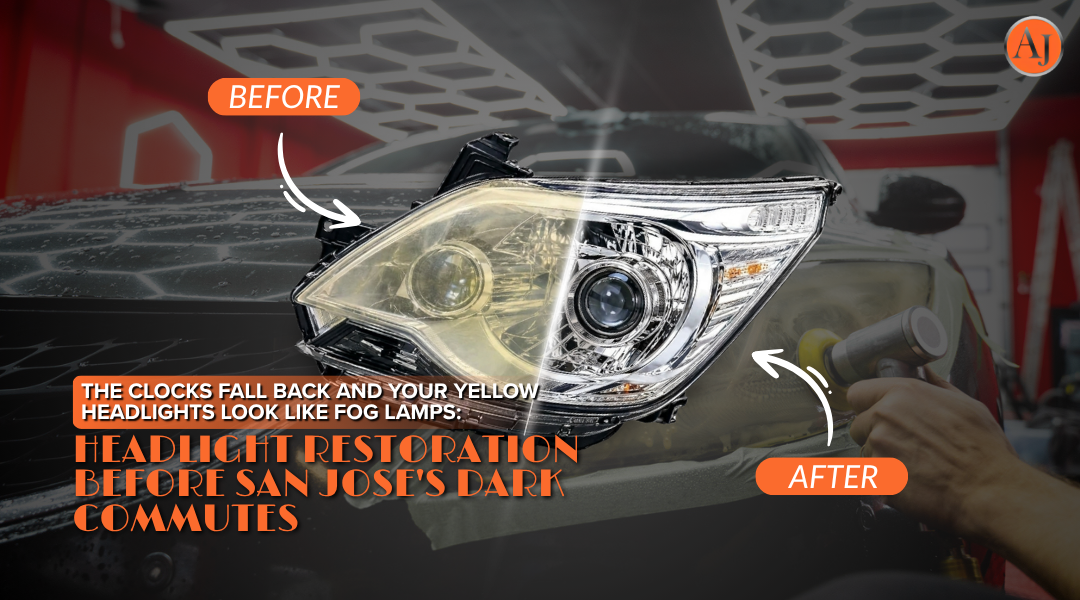
AAA’s lab testing found that hazy, yellow headlights put out as little as a fifth of the light of new ones. That matters more once daylight saving ends on the first Sunday in November. Evening commutes home on the 101 or 280 then finish in the dark, with winter rain close behind. Sunlight is the cause. It eats away the outer surface of the plastic, and when the damage stops there, a restoration takes one to two hours and brings most of the light back.
Quick Summary: Key Takeaways
- The yellow is UV damage: sunlight strips the lens coating.
- The light loss is large: AAA measured deteriorated low beams at 22 percent of a new lamp’s output.
- Restoration recovers most of it: sanding, polishing and a fresh protective coat brought lenses back to about 70 percent in AAA’s tests.
- Inside damage needs new parts: moisture or cracks usually mean replacement.
Yellow Headlights Are Sun Damage on the Lens
Headlight lenses on almost every modern car are plastic, finished with a thin protective coating from the factory. Sunlight wears that coating away. Once it’s gone, the plastic underneath oxidizes and turns cloudy, then yellow, and it can happen on a car that’s only a few years old.
AAA’s December 2018 research blamed the discoloration on sunlight damage to those coatings, and it noted that deterioration can begin as early as three to five years in. A car that spends its days in an open lot off Coleman Avenue, or nose-out in a driveway in Evergreen where the afternoon sun lands square on the front end, takes that dose every single day of the year. Garaged cars age slower.
Hazy Lenses Cost You Light When You Need It Most
The same AAA study measured low beams from roughly 11-year-old sedans and found they delivered just 22 percent of the light of a new headlight at full capacity. That’s a lot of road you aren’t seeing. AAA also pointed out that half of all crashes happen at night. Check yours tonight.
November stacks the odds. After the time change, the evening commute on the 101 and 280 happens after sunset for months. Add rain on the windshield, wet lane markings on 280 and a lens that smears its beam yellow instead of throwing it down the road. So the darkest, wettest drives of the year fall to the car with the dimmest lights.
How to Tell Surface Haze From Damage Inside the Lens
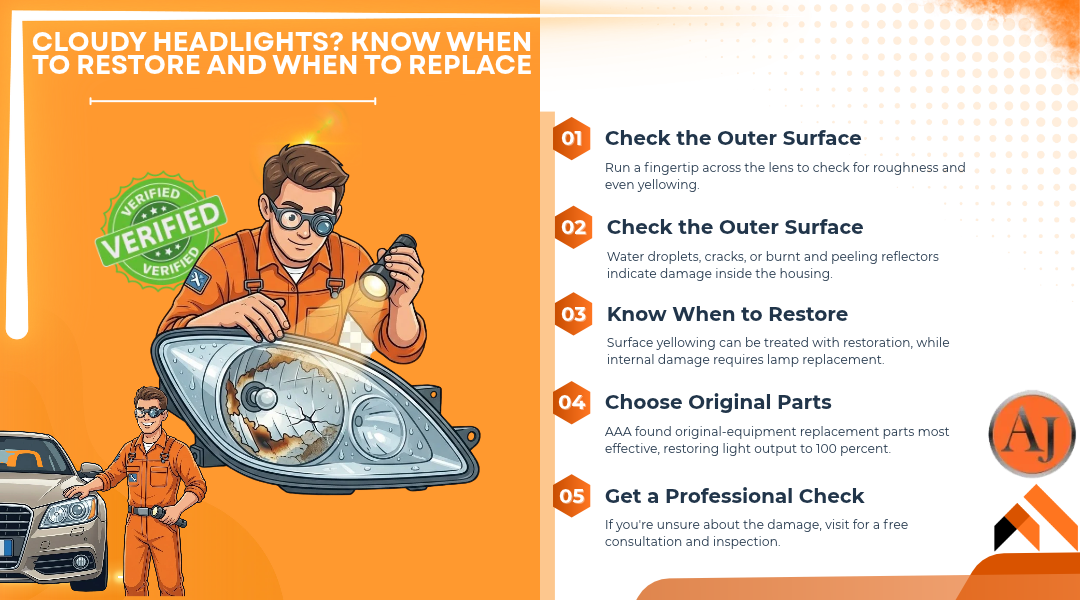
Run a fingertip across the outside of the lens. If it feels rough and the yellowing is even across the surface, the damage is on the outside, and that’s what restoration fixes.
Look inside, too. Water droplets behind the lens, a crack, or a reflector that looks burnt or peeling means the problem is sealed inside the housing where no polisher can reach. That’s a parts job. AAA found replacement with original-equipment parts was the most effective fix, restoring light output to 100 percent. For internal damage, skip the detail and buy the lamp.
Not sure which one you have? Drop in for a free consultation and we’ll look at it with you.
What AJ’s Headlight Restoration Involves
Our headlight restoration takes one to two hours. It’s a multi-step job: the damaged surface is sanded away in stages, the lens is polished back to clear, and a new protective coating goes on to replace the one the sun destroyed. Skip that last step and the bare plastic starts yellowing all over again.
Be realistic about the result. In AAA’s tests, professional and DIY restoration brought light output back to about 70 percent of a new lamp, more than three times what a badly yellowed lens delivers. AAA called restoration the most cost-effective option, rated new original-equipment lamps as the most effective, and found that restored lenses threw more glare than DOT criteria allow. It isn’t a new headlight. Where replacement lamps cost more than an older car justifies, restoring the lens is how you get most of the light back. And the same sun that clouds a lens oxidizes paint and fades black trim, so if the car’s finish has gone dull, it makes sense to have both done in one visit.
Keep Restored Headlights Clear Through the Rainy Season
Restored lenses look best when they stay clean. Road film dulls a headlight the same way it dulls a windshield, and the rainy season brings plenty of it, so we recommend a hand wash every one to two weeks.
A WashPass puts at least one AJ Signature hand wash on the calendar every month, and that wash covers the grille and headlights along with the paint. Plans start at $59 a month. Between visits, park in the shade when you can.
Frequently Asked Questions
Q: Why do headlights turn yellow?
A: Sunlight breaks down the protective coating on plastic headlight lenses, and the exposed plastic oxidizes. Cars that park outside all day yellow fastest.
Q: How long does headlight restoration last?
A: Longest when the job ends with a fresh protective coat, because sanded plastic left bare goes straight back to oxidizing. Shade parking and a regular hand wash stretch it further. A quick polish with nothing on top is the version that fades first.
Q: Is headlight restoration worth it, or should I replace the headlights?
A: If the haze is on the outside of the lens, restoration recovers most of the lost light in one to two hours. If there’s moisture, cracking or a damaged reflector inside, replacement is the right call.
Q: How long does headlight restoration take?
A: One to two hours at our shop.
Get Your Headlights Ready for the Dark Months
Clear lenses make the dark months easier to drive. It’s a short job. Bring the car to 702 Coleman Ave, San Jose, CA 95110, at the corner of Coleman and Taylor, where we’ve been detailing cars since 1985. Check ajautodetail.com for the rest of the menu if the paint needs attention too.